

How Market Intelligence Analytics Drives Competitive Advantage
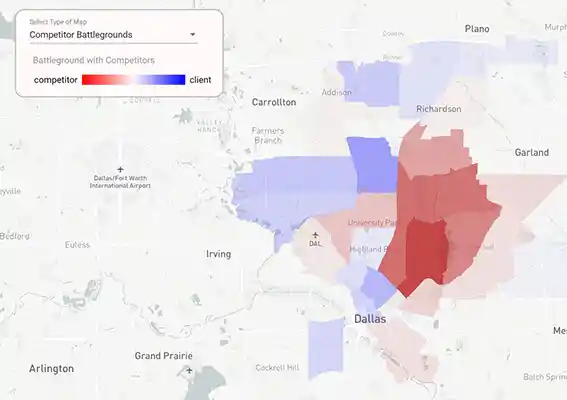
Discover how market intelligence analytics helps businesses analyze trends, anticipate change, and gain a competitive advantage with data-driven strategy.
Markets are constantly evolving, and the pace of that change continues to accelerate. Customer expectations shift, competitors adjust their strategies, and external factors influence demand in ways that are not always immediately visible. In this environment, organizations that rely solely on internal data are operating with an incomplete view of reality. While internal performance metrics provide valuable insight, they only tell part of the story.
To compete effectively, businesses need a broader perspective.
This is where market intelligence analytics becomes essential. By incorporating external data, industry trends, and competitive insights, it provides a more complete understanding of the environment in which a business operates. It allows organizations to see beyond their own performance and into the forces shaping the market as a whole, enabling more informed and forward-looking decisions.
At its core, market intelligence analytics is the process of collecting and analyzing external data to understand market conditions, trends, and competitive dynamics. This includes a wide range of inputs, such as industry developments, competitor activity, consumer behavior patterns, and economic or geographic influences. Each of these elements contributes to a more comprehensive view of how a market is evolving and where opportunity exists.
This broader perspective is critical because internal data alone cannot capture the full context of change.
While internal metrics can highlight what is happening within a business, they do not explain why those changes are occurring or how they compare to the broader market. Without that context, it becomes difficult to determine whether performance shifts are driven by internal factors or external conditions. Market intelligence analytics bridges this gap by connecting internal performance to external reality, allowing organizations to make decisions with greater clarity and confidence.
One of the most valuable outcomes of this approach is the ability to identify emerging opportunities. Markets rarely change overnight. Instead, they shift gradually, with early indicators appearing long before trends become widely recognized. Organizations that are able to detect these signals early are better positioned to act on them.
Market intelligence analytics enables this level of foresight by analyzing patterns across multiple data sources. It helps businesses detect changes in consumer behavior, identify growing or underserved segments, and recognize early signs of market evolution. With this insight, organizations can move sooner, positioning themselves ahead of competitors rather than reacting after opportunities have already matured.
In addition to identifying opportunities, anticipating market shifts is equally important.
Markets are influenced by a wide range of factors, from economic conditions to competitive activity to changes in consumer preferences. These shifts can impact demand quickly, often requiring organizations to adapt their strategies in real time. Without visibility into these changes, businesses risk falling behind or making decisions based on outdated assumptions.
Market intelligence analytics provides the ability to monitor these trends continuously and forecast potential changes before they fully materialize. By understanding how the market is evolving, organizations can adjust their strategies proactively, maintaining stability while remaining responsive to new conditions.
This proactive approach also strengthens competitive positioning.
Differentiation is most effective when it is grounded in a clear understanding of the competitive landscape. Without that understanding, positioning efforts are often based on internal perception rather than external reality. This can lead to messaging that fails to resonate or strategies that overlook key areas of opportunity.
With market intelligence analytics, businesses can analyze competitor strengths and weaknesses, identify gaps in the market, and refine their positioning based on measurable insight. This leads to strategies that are not only more informed, but also more effective in capturing attention and driving engagement.
These insights play a critical role in strategic planning as well.
Every major decision, whether related to growth, investment, or expansion, depends on a clear understanding of both internal capabilities and external conditions. When that understanding is incomplete, risk increases and opportunities may be overlooked. Market intelligence analytics provides the foundation for more confident decision-making by offering a comprehensive view of market dynamics.
By highlighting both risks and opportunities, it enables organizations to allocate resources more effectively, prioritize initiatives with greater precision, and build strategies that are both proactive and resilient. Over time, this leads to stronger performance and a more sustainable approach to growth.
Ultimately, the value of market intelligence analytics lies in its ability to turn information into advantage.
Data on its own does not create impact. It becomes valuable when it is translated into insight and applied to real decisions. By integrating external data with internal strategy, businesses can move beyond reactive thinking and begin operating with greater foresight.
In a competitive environment where visibility is limited and change is constant, that ability to see more and act earlier creates a meaningful advantage.
Organizations that invest in understanding their market are better positioned to adapt, differentiate, and grow. They are able to identify opportunities before they become obvious, respond to shifts with confidence, and build strategies that are aligned with the realities of the market.
To gain deeper insight into your market and strengthen your competitive position, explore how market intelligence analytics can elevate your strategy at vadoanalytics.com.