33%
Year-over-year sales increase


Retail Case Study
A Texas dealer group needed to correct weak sales momentum and improve performance during slower seasonal windows.
Vado found that most traffic was concentrated near store-adjacent zip codes while stronger buyer-density zones to the southwest were underutilized.
The team shifted campaign emphasis to areas with higher similarity to proven buyers and stronger market share capture potential.
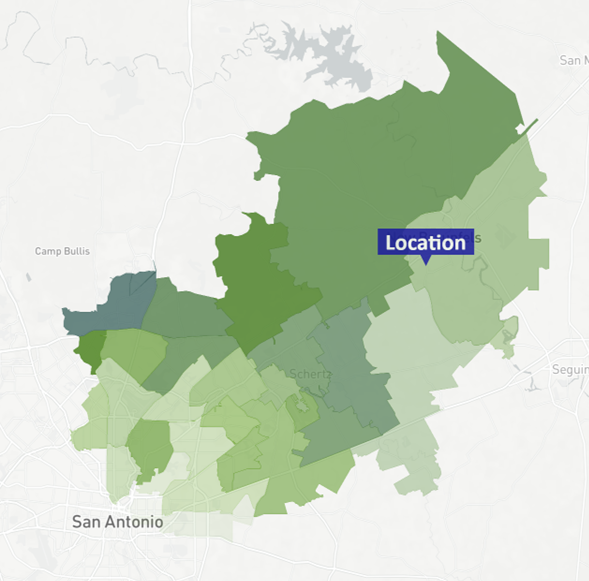
Past Customer Activity
33%
Year-over-year sales increase
2,030+
Incremental units sold
26%
Sales increase during slow summer period
The engagement replaced proximity-heavy targeting with demand-density targeting. By reallocating to zip codes with stronger conversion likelihood, the group improved both total volume and seasonal consistency.
This created a repeatable geography model for future planning, especially in periods where baseline traffic softens.
Management needed a faster, data-backed improvement plan without relying exclusively on promotions.
Historical results were assessed by zip to separate convenience traffic from true growth opportunity.
Household clusters matching best-customer traits were ranked for incremental spend allocation.
Campaign strategy emphasized areas likely to sustain demand during slower market periods.
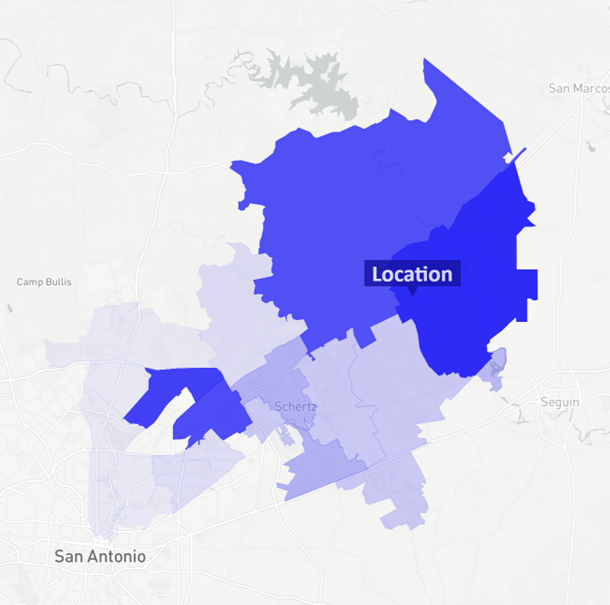
Recommended Target
The group implemented a market reallocation strategy that balanced core-store support with deliberate conquest in higher-yield geographies.
Performance tracking by zip and season gave management a clearer basis for continuous spend refinement.
The strategy produced significant unit growth and helped stabilize performance in a traditionally difficult period.
Overall volume improved following geography and audience reallocation.
The campaign generated substantial incremental contribution above baseline levels.
The revised targeting model held up during seasonal slowdown conditions.
The primary gain came from targeting precision and geography shift, not from an incentive-only approach.
Spend was concentrated where baseline buyer propensity was stronger, reducing seasonal volatility.
Yes. It is especially effective when groups need to reduce overlap and improve market-level efficiency.