345% - 465%
Increase in new patient activity by location


Retail Case Study
A Dallas-Fort Worth clinic chain wanted to grow patient volume by expanding into markets with stronger lookalike patient potential.
Vado analyzed clinic traffic and competitor dynamics to identify where high-probability new patients were concentrated.
The client launched a localized campaign with control-group measurement to validate incremental gains before wider rollout.
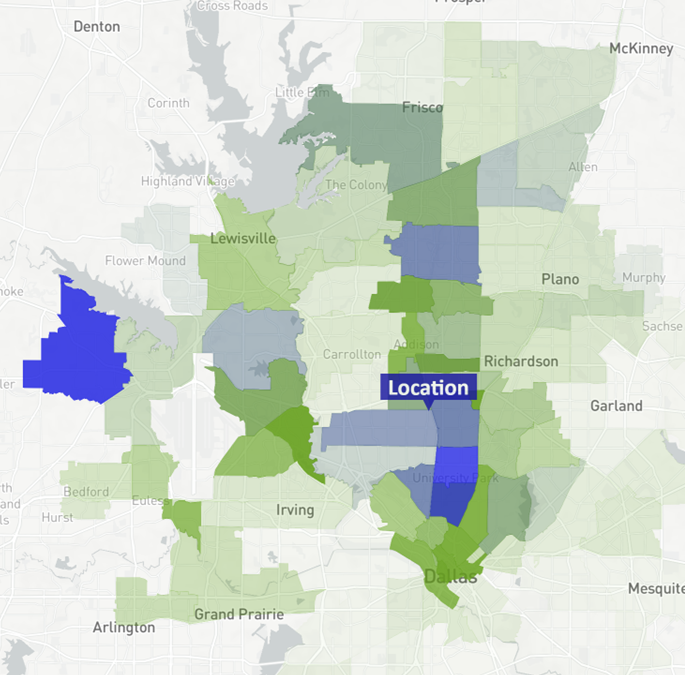
Past Customer Activity
345% - 465%
Increase in new patient activity by location
83% - 86%
New-patient share from selected target areas
Localized
Marketing model adopted after ROI analysis
The engagement demonstrated that local-market precision substantially outperformed broader regional campaign assumptions.
Control-based validation gave leadership confidence to shift spend toward localized acquisition strategies with stronger return.
The chain needed a practical framework for expansion that improved patient growth while clearly proving incremental impact.
Lookalike patient segments were identified using first-party traffic and surrounding market data.
Targeting and messaging were adapted by market instead of applying one regional strategy.
A control framework quantified incremental patient lift and guided next allocation decisions.
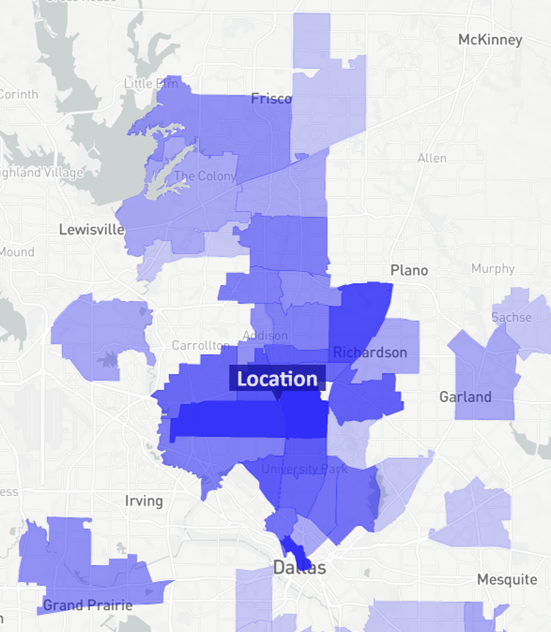
Recommended Target
The chain redirected resources to local zones with stronger conversion potential and tracked outcomes by location.
Findings informed a broader shift away from lower-efficiency regional media toward localized growth plays.
The strategy delivered outsized patient growth and established a repeatable model for future expansion planning.
Lift varied by location but remained consistently strong versus baseline.
Most incremental growth came directly from recommended zones.
The client reallocated away from broad regional campaigns to market-specific plans.
They aligned more closely to each market's actual patient profile and competitive context.
Control groups were used to compare outcomes against baseline behavior and isolate lift.
Yes. The same local opportunity mapping can inform both marketing and site strategy.