7%
Year-over-year revenue increase


Retail Case Study
A national pizza chain wanted stronger summer performance but preferred not to increase budget or rely on heavy discounts.
Vado reviewed ATZ-level performance and identified subsegments that were underperforming relative to lookalike opportunity zones.
Spend was shifted into higher-return areas while maintaining overall budget and protecting transaction quality.
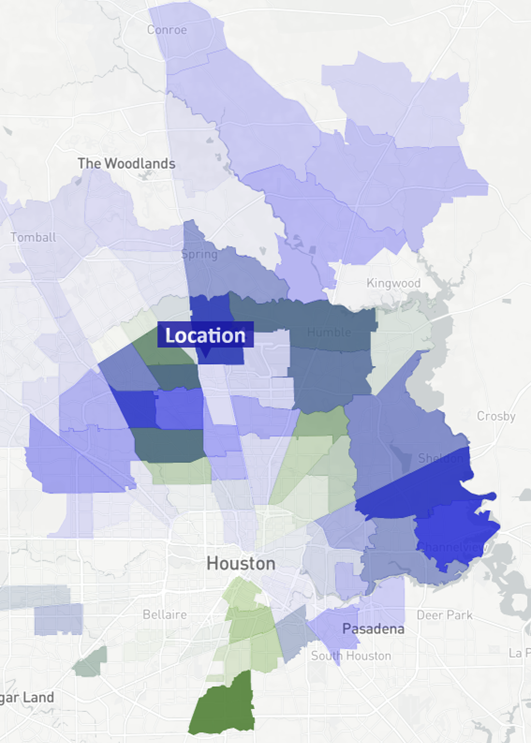
Past Customer Activity
7%
Year-over-year revenue increase
Flat Spend
No increase in marketing budget
No Added Offers
Revenue growth without extra discounting
The engagement proved that growth can come from allocation quality improvements even when budget and promotional posture stay unchanged.
ATZ optimization helped the chain focus resources where incremental demand probability was strongest.
The brand needed a better summer playbook that improved ROI without additional spend risk.
Each ATZ pocket was assessed for response quality and incremental revenue contribution.
High-performing customer patterns were used to locate additional high-probability zones.
Spend moved from weak segments to stronger ones and was continuously monitored for efficiency.
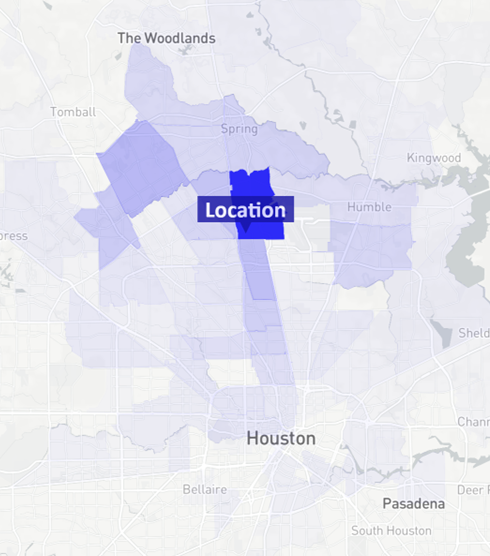
Recommended Target
The chain launched a refined summer strategy that concentrated media pressure on high-probability zones while suppressing low-return areas.
This improved campaign productivity without requiring additional discounts or net-new budget.
The optimized ATZ strategy produced measurable slow-season growth and improved confidence in scaling the framework.
Slow-season results improved following geography and segment reallocation.
Revenue gains came from targeting efficiency rather than margin pressure.
Performance gains informed broader strategic work on brand loyalty dynamics.
Performance variation inside ATZs is significant; subsegment precision captures value broad planning misses.
No. The key gain came from better allocation within existing channel and budget structure.
Yes. The same ATZ scoring and reallocation logic can be replicated market by market.